Using the debugger
When an error occurs you can start using the debugger by creating a cell with the content %debug and execute it.
Please remove this cell from the notebook once done with debugging as it breaks the marking system!
%debug
Debugger commands
This is a command prompt, you can use command in it to navigate.
porprintto print a variablelorlistto show the codeuorupto move up the stackdordownto move down the stackworwhereto show the call stackqorquitto quit, not optional!horhelpto get help
The call stack
Let’s us an example
def onlyForPositive(x):
    assert x > 0
    return 2*x
def first(x):
    a = 1
    return second(x + a )

def second(x):
    b = "Important text"
    return third(2*x)

def third(x):
    return onlyForPositive(x)
Let’s set off the trap…
first(-9)
---------------------------------------------------------------------------

AssertionError                            Traceback (most recent call last)

<ipython-input-3-507e734bd062> in <module>
----> 1 first(-9)


<ipython-input-2-67307958987f> in first(x)
      1 def first(x):
      2     a = 1
----> 3     return second(x + a )
      4
      5 def second(x):


<ipython-input-2-67307958987f> in second(x)
      5 def second(x):
      6     b = "Important text"
----> 7     return third(2*x)
      8
      9 def third(x):


<ipython-input-2-67307958987f> in third(x)
      8
      9 def third(x):
---> 10     return onlyForPositive(x)


<ipython-input-1-f984f816e072> in onlyForPositive(x)
      1 def onlyForPositive(x):
----> 2     assert x > 0
      3     return 2*x


AssertionError:
This is the call stack: a succession of functions calling each other.
Each “layer” on the stack is a function call, it is called a frame.
If you call the debugger, you get a command prompt:
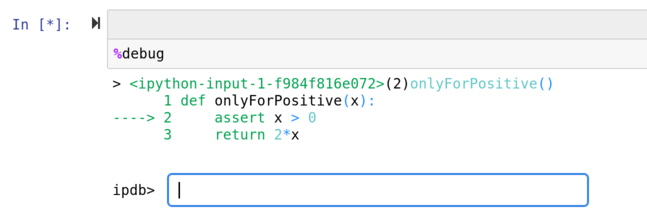
You can navigate though the call trace using up and down.
You can print the call stack in the debugger using where.
You can print all variable accessible in a frame, and even execute code.
%debug
> [0;32m<ipython-input-1-f984f816e072>[0m(2)[0;36monlyForPositive[0;34m()[0m
[0;32m 1 [0;31m[0;32mdef[0m [0monlyForPositive[0m[0;34m([0m[0mx[0m[0;34m)[0m[0;34m:[0m[0;34m[0m[0;34m[0m[0m
[0m[0;32m----> 2 [0;31m [0;32massert[0m [0mx[0m [0;34m>[0m [0;36m0[0m[0;34m[0m[0;34m[0m[0m
[0m[0;32m 3 [0;31m [0;32mreturn[0m [0;36m2[0m[0;34m*[0m[0mx[0m[0;34m[0m[0;34m[0m[0m
[0m
ipdb> q
You can also decide where to call the debugger in the code, so you can be more proactive:
from IPython.core.debugger import set\_trace
def onlyForPositive(x):
    if x <= 0:
        set\_trace()
    assert x > 0
    return 2*x
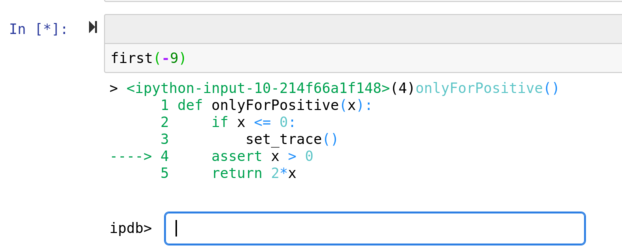
You can now investigate and even fix the value of x if you want!
first(-9)
> [0;32m<ipython-input-10-214f66a1f148>[0m(4)[0;36monlyForPositive[0;34m()[0m
[0;32m 1 [0;31m[0;32mdef[0m [0monlyForPositive[0m[0;34m([0m[0mx[0m[0;34m)[0m[0;34m:[0m[0;34m[0m[0;34m[0m[0m
[0m[0;32m 2 [0;31m [0;32mif[0m [0mx[0m [0;34m<=[0m [0;36m0[0m[0;34m:[0m[0;34m[0m[0;34m[0m[0m
[0m[0;32m 3 [0;31m [0mset\_trace[0m[0;34m([0m[0;34m)[0m[0;34m[0m[0;34m[0m[0m
[0m[0;32m----> 4 [0;31m [0;32massert[0m [0mx[0m [0;34m>[0m [0;36m0[0m[0;34m[0m[0;34m[0m[0m
[0m[0;32m 5 [0;31m [0;32mreturn[0m [0;36m2[0m[0;34m*[0m[0mx[0m[0;34m[0m[0;34m[0m[0m
[0m
ipdb> q
---------------------------------------------------------------------------
BdbQuit Traceback (most recent call last)
<ipython-input-11-507e734bd062> in <module>
----> 1 first(-9)
<ipython-input-2-67307958987f> in first(x)
1 def first(x):
2 a = 1
----> 3 return second(x + a )
4
5 def second(x):
<ipython-input-2-67307958987f> in second(x)
5 def second(x):
6 b = "Important text"
----> 7 return third(2*x)
8
9 def third(x):
<ipython-input-2-67307958987f> in third(x)
8
9 def third(x):
---> 10 return onlyForPositive(x)
<ipython-input-10-214f66a1f148> in onlyForPositive(x)
2 if x <= 0:
3 set\_trace()
----> 4 assert x > 0
5 return 2*x
<ipython-input-10-214f66a1f148> in onlyForPositive(x)
2 if x <= 0:
3 set\_trace()
----> 4 assert x > 0
5 return 2*x
/usr/lib64/python3.7/bdb.py in trace\_dispatch(self, frame, event, arg)
86 return # None
87 if event == 'line':
---> 88 return self.dispatch\_line(frame)
89 if event == 'call':
90 return self.dispatch\_call(frame, arg)
/usr/lib64/python3.7/bdb.py in dispatch\_line(self, frame)
111 if self.stop\_here(frame) or self.break\_here(frame):
112 self.user\_line(frame)
--> 113 if self.quitting: raise BdbQuit
114 return self.trace\_dispatch
115
BdbQuit:
The debugger can be turned on automatically when you encounter an error using
%pdb
Automatic pdb calling has been turned ON
Calling the same command again turns it off:
%pdb
Automatic pdb calling has been turned OFF